
The Wizard's Workshop
Get the game here:
This game was developed by a team of students, myself included during the final semester of my third year.
Project Name:
- The Wizards Workshop
Software Used:
-Unreal Engine 4 Blueprint
-JIRA
-MS Teams
The game revolves around the player, who awakes in a wizards tower. The player must solve puzzles around the tower and the workshop in order to get to the top of the wizards tower to make it in time for the wizards birthday party!
Gameplay Tech
Light Puzzle Mechanics
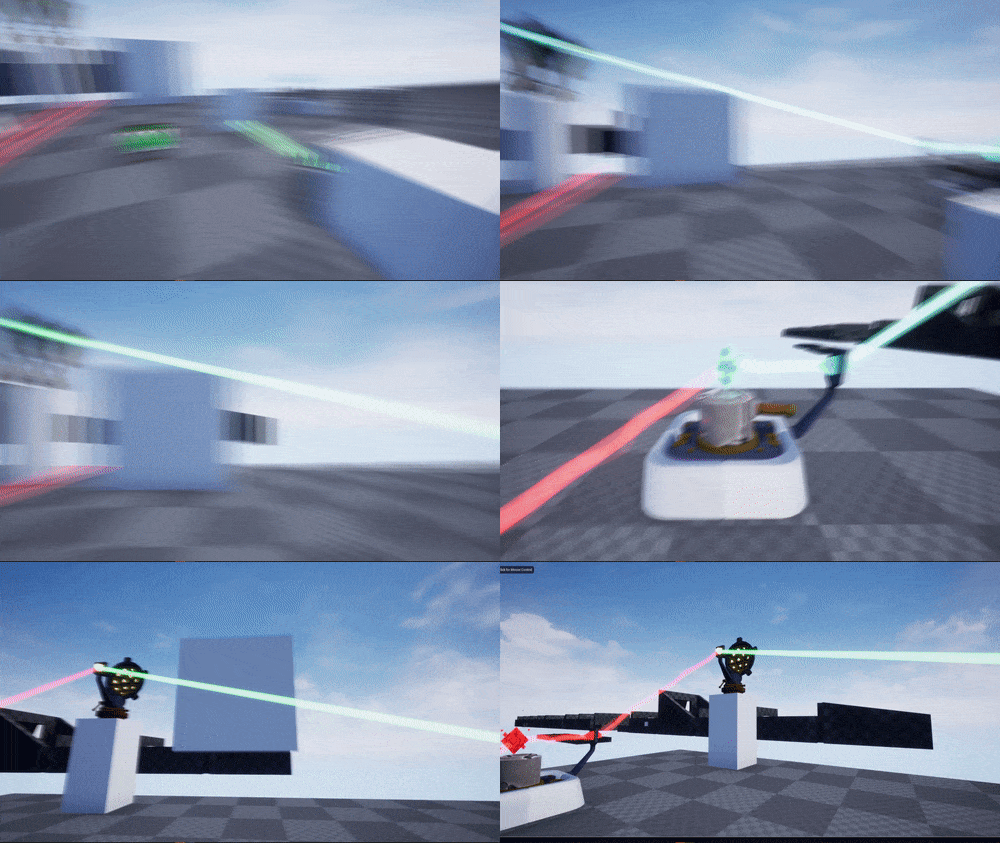
Goal: Add a set of puzzle mechanics that are visually interesting and that can be linked together easily by the player
-
Light can be reflected multiple times off of certain surface types. The amount of times and what surfaces can be declared by designers using them in their levels
-
Light can be given a certain colour. This can be used for light receivers that need a certain colour, or it can be changed by a Light Colour Changer.
-
Multiple light based mechanics can be stringed together by a designer to match the complexity of the puzzle they need.
-
Light receivers can require multiple colour inputs like shown, thus making the player have to find and combine the right colours to complete the puzzle.
-
Worked with level design teams to make sure that setting up each part of the mechanic with each other was as easy and quick as possible, such as setting up beams to snap to objects if close enough to their target.
-
Worked with art teams to make sure that each object looked good while still giving clear indications as to what the individual objects are doing

Hidden Puzzle Mechanics
Goal: Add a puzzle mechanic that requires a player item and can either be essential or used as aid for other puzzles.
-
Level designers can place an object into the level and set it to be hidden from the player's view, or use an object that places 3D text that is hidden from the player's view.
-
These objects can be seen using a item called the "Looking Glass" when held up to the players view.
-
Designers can use this mechanic to hide clues to a puzzle, or to hide items like switches from the player.
Narrative Event Mechanics
Goal: Add a mechanic that allows level designers to display narrative information and or lock player input while they read dialogue.
-
Level designers can place a trigger for the narrative events. Narrative events can also be called by any puzzle once activated/completed.
-
Either method of setting up narrative events is very easy to understand and quick to set up exactly what is needed.

Below is a gallery of screenshots taken from in-game and in-editor from the game:


